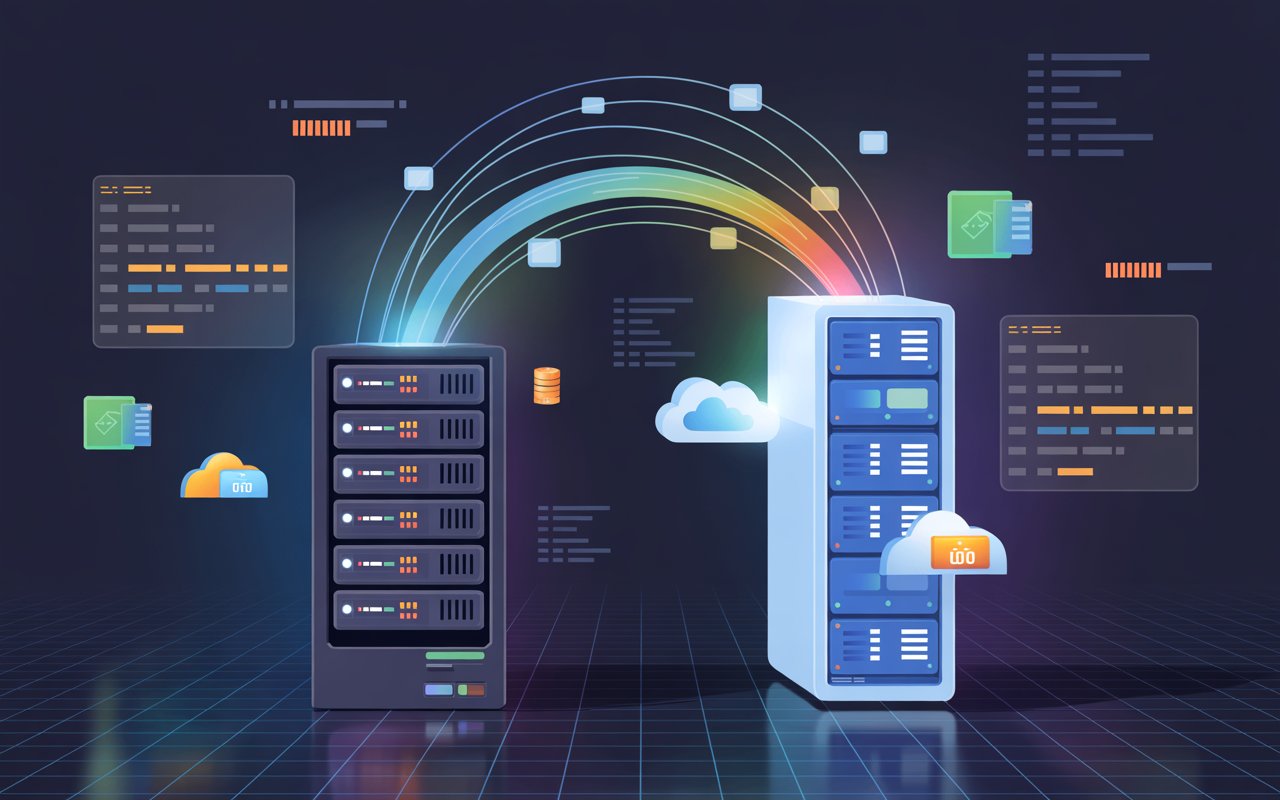
Moving a WordPress site—whether to a new host or a new domain—is called a migration.
It’s a normal part of growing a website, but it can sometimes cause your site to slow down right after the move.
This happens more often than you think. Changes in servers, settings, or configurations can affect how your site loads.
The good news is that this problem is usually easy to fix. With the right steps, you can quickly restore your site’s speed and performance.
If your site is still slow, check this complete WordPress troubleshooting guide.
Why Your WordPress Site Is Slow After Migration
Server Environment Differences (Old vs New Host)
Not all hosting environments are the same. Your old host may have had faster servers, better hardware, or optimized settings that your new host does not.
If your new server has lower resources—like slower CPUs, less RAM, or no SSD storage—your site will feel slower right away.
Even small differences in server configuration, such as PHP version or server software, can affect performance.
Start by comparing your old and new hosting specs. If your new host is weaker, upgrading your plan or switching providers may be necessary.
DNS Propagation Delays
After a migration, your domain needs time to fully point to the new server. This process is called DNS propagation.
During this period, some visitors may still be routed to the old server while others reach the new one. This can cause inconsistent speed, loading issues, or even partial site content.
DNS changes usually settle within a few hours, but can take up to 24–48 hours. Until then, performance may seem unstable.
Missing or Misconfigured Caching
Caching plays a big role in website speed. During migration, caching settings are often reset, disabled, or not transferred correctly.
Without caching, your site has to load everything from scratch each time someone visits. This increases load times and puts more strain on your server.
Check your caching plugin and server cache settings. Make sure page caching, browser caching, and object caching are all enabled and working properly.
Incorrect File Permissions
File permissions control how your server accesses files. After migration, these permissions can sometimes be set incorrectly.
If permissions are too strict, your server may struggle to read files. If they are too loose, it can cause security risks and unexpected behavior. Both can slow down your site.
Ensure folders are typically set to 755 and files to 644. This allows proper access while keeping your site secure and efficient.
Database or URL Issues
Your database holds all your content and settings. During migration, it may still contain references to your old domain or incorrect paths.
This can lead to broken links, slow queries, or repeated redirects. Mixed content issues (HTTP vs HTTPS) can also affect loading speed.
Run a proper search-and-replace to update all URLs. Then check your database for errors and optimize it to ensure everything runs smoothly.
Check Your New Hosting Performance
Compare Old vs New Hosting Specs
Start by comparing what you had before and what you have now. Look at key details like storage type, CPU power, RAM, bandwidth, and server type (shared, VPS, or dedicated).
If your old host had better resources, your site will likely slow down on a weaker server.
Even if both plans sound similar, performance can vary depending on how resources are managed.
Log into your hosting dashboard or contact support to confirm your current specs.
If anything is unclear, ask your provider directly. You need accurate information before making changes.
Test Server Response Time (TTFB)
Server response time, also called Time to First Byte (TTFB), shows how quickly your server starts responding when someone visits your site.
If your TTFB is high, your server is slow—even before your content begins to load. This is a strong sign of hosting-related issues.
Use tools like GTmetrix or PageSpeed Insights to check this.
As a general rule, aim for a TTFB under 600ms. If it’s consistently higher, your server may be underpowered or poorly configured.
Importance of SSD, CPU, RAM, and Server Location
Your hosting hardware directly affects speed. SSD storage is much faster than traditional HDD, so always prefer SSD-based hosting.
CPU and RAM determine how well your server handles traffic and processes requests. Low resources can cause delays, especially during busy periods.
Server location also matters. If your server is far from your visitors, your site will take longer to load. Choose a data center close to your main audience for better performance.
When to Consider Switching Hosts
If your site remains slow after basic fixes, your hosting may be the problem. This is especially true if you notice high TTFB, frequent downtime, or limited resources.
No amount of optimization can fully fix poor hosting. In this case, upgrading your plan or moving to a better provider is the most effective solution.
Look for a host that offers strong performance, reliable uptime, and WordPress-specific optimization.
A good hosting foundation makes every other speed improvement more effective.
Fix DNS and Domain Configuration Issues
Ensure DNS Is Fully Propagated
After migration, your domain needs time to point fully to the new server. This process is called DNS propagation.
During this time, some users may still reach the old server while others see the new one. This can cause slow loading, missing content, or inconsistent performance.
Wait at least a few hours after making DNS changes. In some cases, it can take up to 24–48 hours to fully settle.
Avoid making repeated changes during this period, as it can delay propagation further.
Check Nameservers and A Records
Your domain must point to the correct server using nameservers or A records. If these are incorrect, your site may load slowly or not at all.
Log into your domain registrar and confirm your nameservers match your hosting provider. If you’re using A records, make sure the IP address points to your new server.
Even a small mistake here can cause major performance issues. Double-check all entries carefully before saving changes.
Use Tools to Confirm Domain Resolution
You can use online tools to verify where your domain is pointing. These tools show whether your DNS changes have taken effect globally.
Check if your domain resolves to the correct IP address in different regions. This helps you confirm whether propagation is complete or still in progress.
If results are inconsistent, it usually means DNS is still updating. In this case, wait and check again later.
Clear Local DNS Cache
Your device may store old DNS information, which can make it seem like your site is still pointing to the previous server.
Clearing your local DNS cache forces your system to fetch the latest DNS records. This helps you see the most up-to-date version of your site.
You can do this through simple commands on your computer or by restarting your network. After clearing the cache, reload your site and test its speed again.
Update WordPress URLs and Database Settings
Check WordPress Address (URL) and Site Address
Start by confirming your main site URLs are correct. In your WordPress dashboard, go to Settings → General and check both the WordPress Address (URL) and Site Address (URL).
These should match your new domain exactly, including HTTPS if your site uses SSL. If they still point to the old domain, your site may load slowly or redirect multiple times.
Update them if needed, then save changes. If you cannot access your dashboard, you can update these values directly in the database or in the wp-config.php file.
Fix Mixed Content (HTTP vs HTTPS)
After migration, your site may load some resources over HTTP while the main site uses HTTPS. This is called mixed content, and it can slow down your site and trigger browser warnings.
Check your site using your browser’s developer tools or an online scanner. Look for scripts, images, or stylesheets still loading over HTTP.
Update all resources to use HTTPS. This ensures secure and faster loading, and it prevents unnecessary redirects.
Replace Old Domain References in Database
Your database may still contain links to your old domain. This includes images, internal links, and stored settings.
When WordPress tries to load these outdated links, it can cause delays or broken content. Fixing this is essential for both speed and functionality.
Run a full search-and-replace to update all old URLs to your new domain. Make sure you cover all tables, not just posts and pages.
Use Search-and-Replace Tools Safely
Always use a reliable tool when updating your database. Manual changes can break serialized data and cause serious issues.
Use trusted plugins or command-line tools that handle serialization correctly. Before making any changes, create a full database backup.
Run the replacement carefully, then test your site. Check pages, images, and links to confirm everything loads correctly and quickly.
Reconfigure Caching and CDN
Enable Page Caching
Page caching stores ready-made versions of your pages so your server doesn’t have to rebuild them every time someone visits.
After migration, caching is often turned off or reset. This forces your site to process every request from scratch, which slows everything down.
Install or re-enable your caching plugin. Turn on page caching and apply the recommended settings. This alone can make a noticeable difference in load speed.
Set Up Object and Browser Caching
Object caching helps your site store repeated database queries, reducing server workload. This is especially useful for dynamic sites with lots of content or users.
Browser caching tells visitors’ browsers to store static files like images, CSS, and JavaScript. This means returning visitors don’t have to download everything again.
Enable both options in your caching plugin or hosting panel. Make sure settings are active and properly configured.
Reconnect or Configure CDN (e.g., Cloudflare)
A Content Delivery Network (CDN) stores copies of your site on servers around the world. This helps users load your site from a location closer to them.
After migration, your CDN may disconnect or still point to your old server. This can cause delays or loading errors.
Log into your CDN provider and confirm your domain is connected to the new server. Update DNS settings if needed. If you use Cloudflare, check that your records and proxy status are correct.
Clear All Caches After Setup
Once everything is configured, clear all caches. This includes your caching plugin, CDN cache, server cache, and even your browser cache.
Old cached files can prevent new settings from taking effect. Clearing everything ensures your site loads fresh and reflects your changes.
After clearing, test your site again. You should see faster load times and more consistent performance.
Optimize Database After Migration
Remove Leftover Migration Data
Migration tools often leave behind temporary files, duplicate entries, or unused tables. These don’t help your site and can slow down database queries.
Check your database for tables or entries that are no longer needed. This may include old staging data, backup tables, or migration logs.
Remove anything that is clearly unused. Always take a full database backup before deleting data to avoid mistakes.
Clean Post Revisions, Spam Comments, and Transients
Over time, WordPress stores a lot of extra data. This includes post revisions, spam comments, and expired transients (temporary cached data).
After a migration, this clutter can increase database size and slow down performance. Cleaning it helps your site run more efficiently.
Delete unnecessary revisions, clear spam and trash comments, and remove expired transients. This reduces load on your database and improves speed.
Repair and Optimize Tables
Database tables can become fragmented or slightly corrupted during migration. This affects how quickly data is stored and retrieved.
Use your hosting panel or database tool (like phpMyAdmin) to repair and optimize tables. This process reorganizes your data and improves efficiency.
Run this step carefully. It’s quick, but always ensure you have a backup before making changes.
Use a Reliable Database Optimization Plugin
If you prefer a simpler approach, use a trusted database optimization plugin. These tools automate cleaning and optimization tasks safely.
Choose a plugin with good reviews and regular updates. Configure it to clean revisions, transients, and other unnecessary data.
You can also schedule automatic cleanups. This keeps your database optimized over time without manual work.
Check Plugins and Theme Compatibility
Disable All Plugins and Test Speed
Start by turning off all plugins at once. This helps you quickly see if a plugin is causing the slowdown.
After disabling them, test your site speed again. If performance improves, you know one or more plugins are the issue.
Turn plugins back on one by one. Test your site after each activation. This step-by-step process helps you find the exact plugin causing the problem.
Identify Outdated or Incompatible Plugins
Some plugins may not work well with your new hosting setup or PHP version. Outdated plugins can also slow down your site or create conflicts.
Check for updates and install the latest versions. If a plugin hasn’t been updated in a long time, it may no longer be reliable.
Remove or replace any plugin that causes errors, slows down your site, or is no longer supported.
Ensure Theme Works Well with New Environment
Your theme plays a major role in performance. After migration, it may not be fully compatible with your new server settings.
Switch to a default WordPress theme temporarily and test your site speed. If performance improves, your current theme may be the issue.
Make sure your theme is updated and optimized. If it remains slow, consider switching to a lightweight, well-coded alternative.
Replace Heavy or Unnecessary Plugins
Too many plugins or poorly built ones can slow down your site. Some plugins load extra scripts, queries, or features you don’t need.
Review all installed plugins and remove anything unnecessary. Replace heavy plugins with lighter alternatives where possible.
Focus on keeping only essential tools. A lean setup improves speed, stability, and overall performance.
Fix File and Image Issues
Re-upload Missing Media Files
After migration, some media files may not transfer correctly. This can result in broken images or empty spaces on your pages.
Check your site carefully, especially older posts and pages. If images are missing, upload them again through the Media Library and update the links if needed.
You can also compare your /wp-content/uploads/ folder with your backup to confirm everything is in place.
Regenerate Thumbnails
WordPress creates multiple image sizes for different uses. After migration, these thumbnails may be missing or not properly generated.
This can cause layout issues and slow loading, as the wrong image sizes may be used.
Use a thumbnail regeneration plugin to recreate all image sizes. This ensures your site loads the correct image dimensions for each section.
Compress and Optimize Images
Large image files are one of the most common causes of slow websites. Migration does not automatically optimize your images.
Compress your images to reduce file size without losing quality. You can use plugins or online tools to handle this.
Also consider using modern formats like WebP. Smaller image sizes mean faster load times and better performance.
Ensure Correct File Permissions
Incorrect file permissions can prevent your server from accessing images and other media files efficiently.
If permissions are too restrictive, files may not load at all. If they are too open, it can create security risks.
Set folders to 755 and files to 644. Then test your site to make sure all images and files load correctly without delays.
Enable PHP and Server-Level Optimizations
Update to the Latest PHP Version
Your PHP version has a direct impact on speed. Older versions are slower and less efficient.
Log into your hosting panel and check your current PHP version. If it’s outdated, upgrade to a newer supported version (such as PHP 8.x).
After updating, test your site to ensure everything works correctly. Most modern themes and plugins support newer PHP versions and will run faster.
Enable OPcache
OPcache improves performance by storing precompiled PHP code in memory. This reduces the need to process the same code repeatedly.
Many hosting providers offer OPcache by default, but it may not always be enabled after migration.
Check your PHP settings or ask your host to confirm it’s active. Once enabled, your site should respond faster with less server load.
Use GZIP or Brotli Compression
Compression reduces the size of files sent from your server to the browser. Smaller files load faster.
GZIP is widely supported and easy to enable. Brotli offers even better compression, but it may depend on your server setup.
You can enable compression through your hosting panel, caching plugin, or server configuration. After enabling it, test your site to confirm it’s working.
Check Server Configuration (Apache/Nginx Settings)
Your server software—Apache or Nginx—controls how your site is delivered. After migration, important settings may not carry over.
Check for key optimizations like caching rules, compression settings, and proper handling of static files.
If you’re unsure, ask your hosting provider to review your server configuration. A properly configured server ensures your site runs smoothly and efficiently.
Test Your Website Speed Properly
Use Tools Like GTmetrix or PageSpeed Insights
Start by testing your site with trusted speed tools. GTmetrix and PageSpeed Insights are reliable and easy to use.
Enter your website URL and run a full test. These tools show load time, performance scores, and specific issues affecting your site.
Focus on key metrics like load time, page size, and server response. Use the recommendations provided to guide your next steps.
Compare Before and After Results
Testing once is not enough. You need to compare the results before and after making changes.
Run a test, apply a fix, then test again. This helps you see what actually improves your site and what does not.
Keep track of your results. Even small improvements can add up to a much faster website.
Monitor Core Web Vitals
Core Web Vitals measure real user experience. They focus on loading speed, interactivity, and visual stability.
Pay attention to metrics like Largest Contentful Paint (LCP), First Input Delay (FID), and Cumulative Layout Shift (CLS).
Aim for “good” scores in all areas. Improving these metrics helps your site feel faster and can also benefit your search rankings.
Test from Different Locations
Your site may load quickly in one region but slowly in another. This often depends on your server location and CDN setup.
Use testing tools that allow you to choose different locations. Run tests from regions where your audience is based.
This helps you identify delays caused by distance or poor CDN configuration. Fixing these issues ensures a consistent experience for all visitors.
When to Contact Your Hosting Provider
Persistent Slow Server Response
If your site remains slow even after applying basic fixes, the issue may be on the server side.
Check your server response time (TTFB). If it stays high across multiple tests, your hosting environment may not be performing well.
At this point, contact your hosting provider. Ask them to investigate server performance and confirm if your account is properly optimized.
Resource Limits Being Hit
Hosting plans often come with limits on CPU, RAM, and bandwidth. If your site exceeds these limits, performance will drop.
You may notice slow loading, errors, or temporary downtime during traffic spikes.
Check your hosting dashboard for resource usage. If limits are being reached, ask your provider about upgrading your plan or optimizing resource allocation.
Server Misconfiguration
After migration, server settings may not be correctly configured. This includes caching, PHP settings, compression, or database connections.
These issues are often not visible from the WordPress dashboard but can significantly affect speed.
Contact your host and request a configuration review. A properly set up server can greatly improve performance without further changes on your end.
Migration Errors Beyond Your Control
Sometimes, migration tools or processes fail to transfer everything correctly. This can lead to missing files, broken database connections, or hidden errors.
If you have checked your setup and still experience problems, the issue may require server-level access to fix.
Reach out to your hosting provider and explain the situation clearly. Most hosts can help identify and resolve migration-related issues quickly.
Prevent Slowdowns in Future Migrations
- Use staging environments: Test the migration on a staging site first to catch issues before affecting your live site.
- Choose high-performance hosting: Pick a reliable host with strong resources to ensure consistent speed after migration.
- Backup before migrating: Always create a full backup so you can quickly restore your site if something goes wrong.
- Test site before going live: Check speed, functionality, and settings to confirm everything works correctly before launch.
Final Thoughts
Slowdowns after a WordPress migration are common and usually easy to fix. Most issues come from small setup changes, not major problems.
Work through each step one at a time. Check your hosting, settings, caching, and database to find what’s causing the slowdown.
Keep monitoring your site speed regularly. This helps you catch issues early and keep your website running fast and smoothly.
To solve the problem faster, read how to troubleshoot WordPress performance issues.
FAQs
Why is my WordPress site slower after migration?
Because settings, caching, or server configurations may not transfer correctly to the new environment.
How long does it take for DNS to fully propagate?
Usually, a few hours, but it can take up to 24–48 hours.
Can migration plugins cause slow performance?
Yes, if they leave behind temporary data or incomplete configurations.
Should I change hosting if my site is slow?
If your server is underpowered or poorly configured, switching hosting can significantly improve speed.
How do I test my site speed after migration?
Use tools like GTmetrix or PageSpeed Insights and compare results before and after changes.





Hi, I’m Daniel Cacheton. I specialize in WordPress performance optimization and have spent 7+ years improving site speed, Core Web Vitals, and overall user experience. I share practical, no-fluff guides based on real testing to help you build faster WordPress websites.