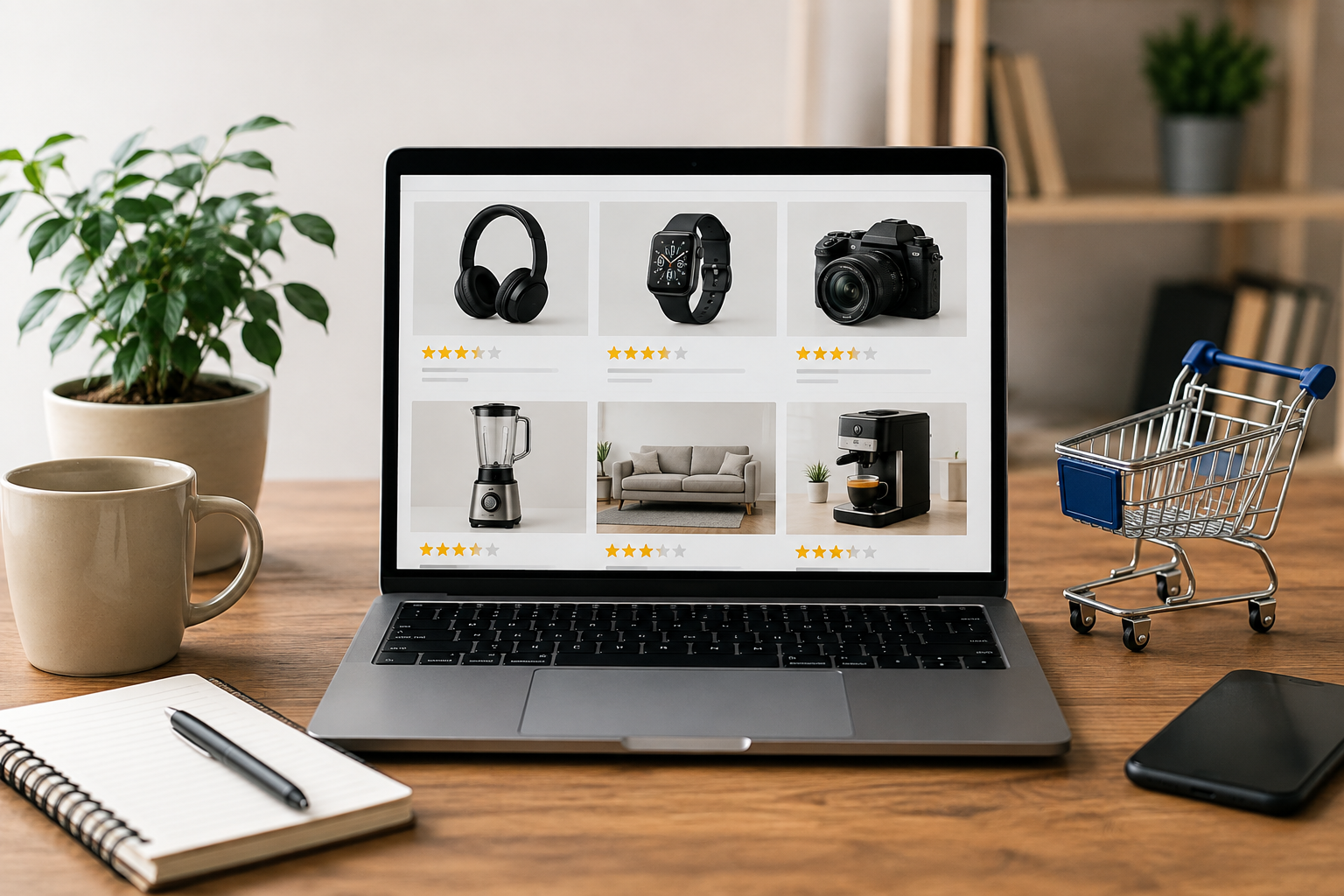
“Best of” posts are a smart way to target affiliate marketing keywords because they reach readers who are already comparing products or considering a purchase.
A well-made roundup can answer their questions while naturally introducing relevant affiliate products.
The key is choosing topics that fit your niche, audience, and available affiliate offers.
Here are 50 best of blog post ideas for affiliate marketing to help you find practical topics with strong buying intent.
Best Products & Tools
1. Best [Products] for Beginners
Create a roundup of beginner-friendly products that are simple to use, affordable, and easy to understand.
For example, a photography blog could publish “Best Cameras for Beginners” and compare models based on ease of use, price, and useful features.
This type of post works well because beginners often need more guidance before making a purchase.
2. Best [Products] for Professionals
Focus on higher-quality products designed for experienced users who need better performance, durability, or advanced features.
For example, a tech blog could create “Best Laptops for Graphic Designers” and compare processing power, display quality, storage, and other features that matter to professionals.
Make it clear why each product is worth considering rather than simply listing expensive options.
3. Best [Products] for Small Businesses
Target business owners who need reliable products without wasting money on features they will never use.
Topics such as “Best Accounting Software for Small Businesses” or “Best Printers for Small Offices” can attract readers with strong buying intent.
Highlight factors such as price, ease of use, scalability, and ongoing costs.
4. Best [Products] for Home Use
Create roundups that help readers choose products for everyday use around the house.
You could cover everything from coffee makers and vacuum cleaners to home office equipment and kitchen appliances.
Keep the recommendations practical and explain which product is best for different household needs.
5. Best [Products] for Students
Students often have specific needs, including affordability, portability, and ease of use.
A post such as “Best Laptops for College Students” can compare products based on battery life, weight, performance, and price.
You can also target more specific searches such as the best headphones for studying or the best tablets for note-taking.
6. Best [Products] for Remote Workers
Remote workers need products that make working from home more comfortable and productive.
Consider topics such as the best webcams, office chairs, microphones, monitors, desks, or noise-canceling headphones for remote work.
Explain which products are best for video calls, long work sessions, small spaces, or professional setups.
7. Best [Products] for Travel
Travel-related product roundups can target readers who are actively preparing for a trip.
Ideas include the best travel backpacks, portable chargers, luggage, travel adapters, headphones, or coffee makers for travel.
Focus on practical features such as size, weight, durability, battery life, and portability.
8. Best [Products] for Families
Family-focused roundups should solve common problems and make buying decisions easier.
For example, you could create “Best Air Purifiers for Families” or “Best Board Games for Families” depending on your niche.
Explain which products work best for different family sizes, ages, budgets, or situations.
9. Best [Products] for [Specific Audience]
Narrowing your audience can make a generic product topic much more useful.
Instead of writing about the best running shoes, for example, target a specific group with topics such as “Best Running Shoes for Beginners” or “Best Running Shoes for Nurses.”
Think about the people who buy products in your niche and the features that matter most to them.
10. Best [Products] for [Specific Problem]
Problem-focused affiliate posts are excellent for reaching readers who already know what they need to solve.
Instead of simply reviewing products, explain which options are best for a specific challenge.
For example, a coffee blog could target “Best Coffee Makers for Weak Coffee” or “Best Coffee Grinders for Consistent Espresso.”
These topics give you a clear angle for comparing products and help readers quickly identify the options most relevant to their situation.
Best Budget & Value Picks
11. Best [Products] Under $25
Create a roundup for readers who want useful products at a very low price point.
For example, “Best Coffee Accessories Under $25” could compare scales, frothers, storage containers, and other affordable items.
Focus on what shoppers actually get for their money rather than simply choosing the cheapest products.
12. Best [Products] Under $50
A $50 price limit gives you more room to recommend products with useful features while still appealing to budget-conscious shoppers.
Compare factors such as quality, performance, durability, and included features.
This format can work particularly well for products that have several options across different price ranges.
13. Best [Products] Under $100
Target shoppers who have a larger budget but still want to keep their purchase below a specific amount.
For example, “Best Espresso Machines Under $100” gives readers a clear price limit while allowing you to compare several competing products.
Explain which options offer the best features at the top of the price range and which provide better value at lower prices.
14. Best Affordable [Products]
This topic works when you want to target shoppers looking for reasonably priced products without setting an exact spending limit.
Use terms such as affordable, reasonably priced, or budget-friendly naturally throughout the article.
Be specific about what makes each recommendation affordable and whether it still delivers acceptable quality.
15. Best Cheap [Products] That Actually Work
This angle addresses a common concern: whether a low-priced product is worth buying.
Compare inexpensive products based on real factors such as materials, performance, reliability, and customer feedback.
Avoid recommending something simply because it has the lowest price, since poor-quality products can lead to disappointing purchases.
16. Best [Products] for the Money
“Best for the money” focuses on overall value rather than the lowest price.
A slightly more expensive product may be the better recommendation if it offers better performance, lasts longer, or includes more useful features.
Explain what shoppers gain from spending a little more so they can make an informed decision.
17. Best Value [Products]
Use this topic to compare products based on the balance between price and quality.
Look at features, performance, durability, warranty coverage, and other factors that can affect long-term value.
This approach is especially useful when your affiliate products have different prices but serve the same basic purpose.
18. Best Premium [Products] Worth the Money
Not every affiliate reader is looking for the cheapest option.
Some shoppers are willing to pay more when a premium product offers noticeably better quality, performance, convenience, or durability.
Explain why each premium recommendation justifies its higher price instead of assuming that more expensive automatically means better.
19. Best [Products] on a Budget
This is a flexible topic that lets you recommend products for readers who have limited spending power.
You can organize the roundup by price range or highlight the best option for different needs.
For example, a post about the “Best Coffee Grinders on a Budget” could include an overall winner, a best beginner option, and a best compact model.
20. Best Affordable Alternatives to [Popular Product]
Help readers find less expensive options when a popular product is outside their budget.
Compare each alternative with the original product and clearly explain where it matches, where it falls short, and how much money shoppers could save.
This creates a useful comparison for readers who like a popular product but want a more affordable choice.
Best Product Comparisons & Alternatives
21. Best Alternatives to [Popular Product]
Create a roundup for readers who like a popular product but want to consider other options.
Explain why someone might choose an alternative, such as a lower price, different features, better availability, or a simpler design.
For example, “Best Alternatives to the Keurig K-Elite” could compare similar coffee makers for different budgets and preferences.
22. Best [Product A] Alternatives
Target searches from people specifically looking for alternatives to a particular product or model.
Compare each alternative directly with the product being replaced so readers can quickly see the differences.
Focus on meaningful factors such as price, performance, features, ease of use, and overall value.
23. Best [Products] Like [Popular Product]
This topic is useful when readers want something similar to a product they already know.
For example, “Best Coffee Makers Like the Ninja DualBrew” could highlight products with similar brewing options or features.
Make it clear which recommendations are closest to the original and which offer a different experience.
24. Best [Products] Better Than [Popular Product]
Use this angle carefully and support the comparison with clear evidence.
Instead of claiming that every recommendation is better, explain which products outperform the popular option in specific areas.
A product might be better for price, durability, performance, features, or a particular type of user.
25. Best [Products] Similar to [Popular Product]
This approach targets readers who want comparable products without necessarily replacing the original.
Describe the key features of the popular product and then show which alternatives offer a similar experience.
This makes the post useful for shoppers who want more choices before buying.
26. Best [Products] for Replacing [Product]
Target people who need to replace an existing product because it broke, became outdated, or no longer meets their needs.
Explain what readers should look for when choosing a replacement.
For example, if replacing an older coffee machine, compare newer models based on size, brewing options, maintenance, and compatibility with existing accessories.
27. Best [Products] for [Use Case] vs. [Use Case]
Create a comparison around two different ways of using a product.
For example, you could write “Best Coffee Makers for Home vs. Office Use” and explain which models suit each environment.
This format helps readers choose based on how they actually plan to use the product rather than comparing specifications alone.
28. Best [Products] Compared by Features
Compare products according to the features that matter most to buyers in your niche.
You could cover factors such as size, capacity, materials, battery life, speed, compatibility, or ease of use.
A simple comparison table can also help readers scan the differences quickly.
29. Best [Products] With the Best Reviews
Focus on products that have strong customer feedback and a good overall reputation.
Look beyond star ratings and consider what customers consistently praise or criticize.
This gives readers more useful information than simply saying a product is highly rated.
30. Best [Products] With the Best Features
Use this topic when product features are a major part of the buying decision.
Explain which features each product offers and why they matter to the intended buyer.
Avoid listing features without context, and focus on how they improve the product’s performance, convenience, or overall usefulness.
Best Brands & Categories
31. Best [Brand] Products
Create a roundup of the strongest products from a specific brand.
For example, a coffee blog could publish “Best Breville Coffee Machines” and compare the brand’s most useful models for different types of buyers.
Explain what makes each product different so readers can choose the model that best fits their needs.
32. Best [Brands] for [Product Category]
Compare several brands that sell products within the same category.
For example, “Best Coffee Machine Brands” could compare brands based on product quality, price, features, reliability, and customer support.
This format works well when shoppers know what they want to buy but are unsure which brand to trust.
33. Best [Products] From [Brand]
Narrow the topic to the best products offered by one brand.
This works especially well for brands with a large product range and several models aimed at different buyers.
Highlight the best overall option along with choices for specific budgets, features, or experience levels.
34. Best-Selling [Products]
Use this format to target shoppers who want to know which products are popular with other buyers.
Popularity can be a useful starting point, but explain why each product sells well instead of treating sales volume as proof of quality.
Include factors such as features, price, customer feedback, and common use cases.
35. Best-Rated [Products]
Round up products that have strong customer ratings and positive feedback.
Look at more than the average star rating and consider whether customers consistently praise the same qualities.
Mention common complaints as well so readers get a balanced view before making a purchase.
36. Best New [Products]
Target shoppers who want the latest products in your niche.
You can cover newly released models, updated versions, or recent additions to a product category.
Explain what is actually new and whether the improvements make the product worth considering over older models.
37. Best [Products] of the Year
Create a yearly roundup that highlights the strongest products available in your niche.
This can become a useful annual content piece that you update as new products enter the market.
Compare products using consistent criteria so readers can understand why each one earned its place on the list.
38. Best [Products] for Every Budget
Cover several price points so readers can find a recommendation that fits their spending limit.
For example, you could include a budget pick, mid-range option, and premium choice.
Make the differences between each price level clear so readers understand what they gain by spending more.
39. Best [Products] in [Specific Category]
Narrow a broad product type into a more specific category.
For example, instead of targeting “Best Coffee Makers,” you could create “Best Drip Coffee Makers for Home” or “Best Single-Serve Coffee Makers.”
Specific categories often make it easier to address a particular buyer need and compare products on relevant features.
40. Best [Products] for Different Experience Levels
Create recommendations for beginners, intermediate users, and experienced buyers.
Different experience levels often require different features, prices, and levels of control.
Explain why each product suits its recommended user so readers can avoid buying something that is too basic or unnecessarily complicated.
Best Seasonal & Trending Products
41. Best [Products] for Christmas
Create a Christmas-focused roundup featuring products that make useful or appealing gifts.
For example, a tech blog could publish “Best Headphones for Christmas Gifts” and organize recommendations by price, age group, or use case.
Include products that are easy to buy and explain why each one makes a good gift.
42. Best [Products] for Mother’s Day
Target shoppers who are searching for thoughtful gifts for mothers, grandmothers, or other important women in their lives.
You can focus on a specific category, such as beauty products, kitchen gadgets, coffee equipment, or personalized gifts.
Consider including options at different price points so readers can find something within their budget.
43. Best [Products] for Father’s Day
Create a roundup that helps shoppers find practical or interesting Father’s Day gifts.
Choose products based on common interests, hobbies, or everyday needs rather than simply listing generic gifts.
For example, a coffee website could recommend the best coffee grinders, travel mugs, or brewing accessories for coffee-loving dads.
44. Best [Products] for Back to School
Back-to-school roundups can target students, parents, and teachers who are preparing for a new school year.
Consider products such as laptops, backpacks, headphones, stationery, tablets, desk accessories, or study tools.
Focus on practical features such as durability, portability, price, and ease of use.
45. Best [Products] for Summer
Create seasonal product roundups around activities and problems that become more common during warmer months.
Travel gear, outdoor equipment, cooling products, beach accessories, and portable appliances can all provide useful affiliate opportunities.
Choose products that solve a clear summer-related need rather than forcing a seasonal angle onto unrelated items.
46. Best [Products] for Winter
Winter-focused posts can target products that help readers stay comfortable, active, or prepared during colder weather.
Depending on your niche, you could cover heaters, winter clothing, blankets, skincare products, outdoor gear, or home accessories.
Explain which products work best for different temperatures, activities, or budgets.
47. Best Trending [Products]
Use this format to cover products that are gaining attention in your niche.
Look for genuine interest through search trends, product launches, social discussions, and customer demand.
Avoid recommending something solely because it is popular, and explain whether the product actually offers useful features or value.
48. Best [Products] Going Viral
This topic targets shoppers who have seen a product repeatedly online and want to know whether it is worth buying.
Explain what makes each product popular and whether the real-world benefits match the online hype.
A balanced review is particularly important here because viral products can attract plenty of attention without necessarily being the best choice for everyone.
49. Best Gift Ideas for [Audience]
Choose a specific audience and create gift recommendations around its interests, needs, or lifestyle.
Examples include “Best Gifts for Coffee Lovers,” “Best Gifts for Remote Workers,” or “Best Gifts for New Homeowners.”
Specific audiences make it easier to recommend relevant products and give readers useful reasons for choosing each one.
50. Best [Products] to Buy in [Year]
Create an up-to-date roundup that highlights the strongest products available during a particular year.
Compare current models based on price, features, performance, reviews, and overall value.
Update the post when better products become available so the recommendations remain useful and accurate for shoppers.
How to Choose a “Best Of” Topic for Affiliate Marketing
- Choose products with strong buyer intent: Focus on products people are actively researching and comparing before making a purchase.
- Target specific audiences, problems, and use cases: Narrow your topic to a clear reader need to make the content more relevant and useful.
- Look for products with available affiliate programs: Choose products you can promote through reliable affiliate programs that fit your niche.
- Prioritize keywords with realistic ranking opportunities: Target specific, less competitive search terms where your site has a reasonable chance of appearing in search results.
- Focus on products that offer useful commissions and conversion potential: Choose products that combine reasonable commissions with a good chance of turning readers into buyers.
How to Create a High-Converting “Best Of” Affiliate Post
A strong “best of” affiliate post should help readers make a confident buying decision without feeling like a sales pitch.
The goal is to give readers enough useful information to compare their options, understand the differences, and choose the product that best fits their needs.
Research the Products
Start by learning as much as possible about every product you plan to recommend.
Check official product information, specifications, customer reviews, warranties, pricing, and common complaints.
If possible, use the products yourself so your recommendations are based on more than information copied from other websites.
Compare Important Features
Focus on the features that actually affect the buying decision.
Depending on your niche, these could include price, size, performance, durability, compatibility, ease of use, or included accessories.
A simple comparison table can help readers see important differences without having to read every paragraph.
Include Pros and Cons
Give readers a balanced view of every recommendation.
Mention the main advantages as well as any limitations that could affect someone’s decision.
Honest pros and cons make your affiliate content more useful and help readers find products that genuinely match their needs.
Add Clear Buying Recommendations
Tell readers who each product is best suited for instead of simply ranking products from first to last.
For example, you might recommend one product as the best overall choice, another as the best budget option, and another for advanced users.
Clear recommendations reduce guesswork and help readers quickly find the option that fits their situation.
Use Affiliate Links Naturally
Place affiliate links where they make sense within the buying journey.
You can link product names, comparison tables, product buttons, or relevant calls to action without adding links to every sentence.
Always make it clear when links are affiliate links and prioritize helpful information over pushing readers to click.
Add Original Photos, Testing, or Experience
Original content can make your recommendations more trustworthy and useful.
Add your own photos, screenshots, testing results, measurements, or personal observations whenever possible.
If you have not personally tested a product, be transparent about that and avoid presenting secondhand information as your own experience.
Keep Product Information Updated
Product prices, availability, features, and models can change over time.
Review your affiliate posts regularly and replace outdated products, broken links, old prices, and discontinued models.
Keeping your recommendations current helps readers make better decisions and prevents your affiliate content from becoming outdated.
Final Thoughts
“Best of” posts are valuable for affiliate marketers because they help readers compare products when they are already considering a purchase.
Focus on specific buyer needs, useful comparisons, and topics with clear commercial intent rather than chasing broad keywords.
Start with a few relevant best of blog post ideas for affiliate marketing, then build out related roundups as your content grows.
FAQs
What is a “best of” blog post?
A “best of” blog post compares several products or services and recommends the best options for specific needs, budgets, or audiences.
Are “best of” posts good for affiliate marketing?
Yes, they can work well because they target readers who are actively comparing products and may be close to making a purchase.
How do I choose products for an affiliate roundup?
Choose relevant products with strong buyer interest, reliable affiliate programs, useful features, and good value for your target audience.
What makes a “best of” affiliate post rank well?
Helpful original content, relevant keywords, clear comparisons, accurate information, strong user intent, and genuine product recommendations can improve its search potential.
How many products should a “best of” post include?
Include enough products to give readers useful choices without making the post difficult to navigate, with around 5–15 options often being practical.
How often should I update affiliate roundup posts?
Review them at least every few months and update prices, links, product availability, features, and recommendations whenever important changes occur.





Hi, I’m Daniel Cacheton. I specialize in WordPress performance optimization and have spent 7+ years improving site speed, Core Web Vitals, and overall user experience. I share practical, no-fluff guides based on real testing to help you build faster WordPress websites.