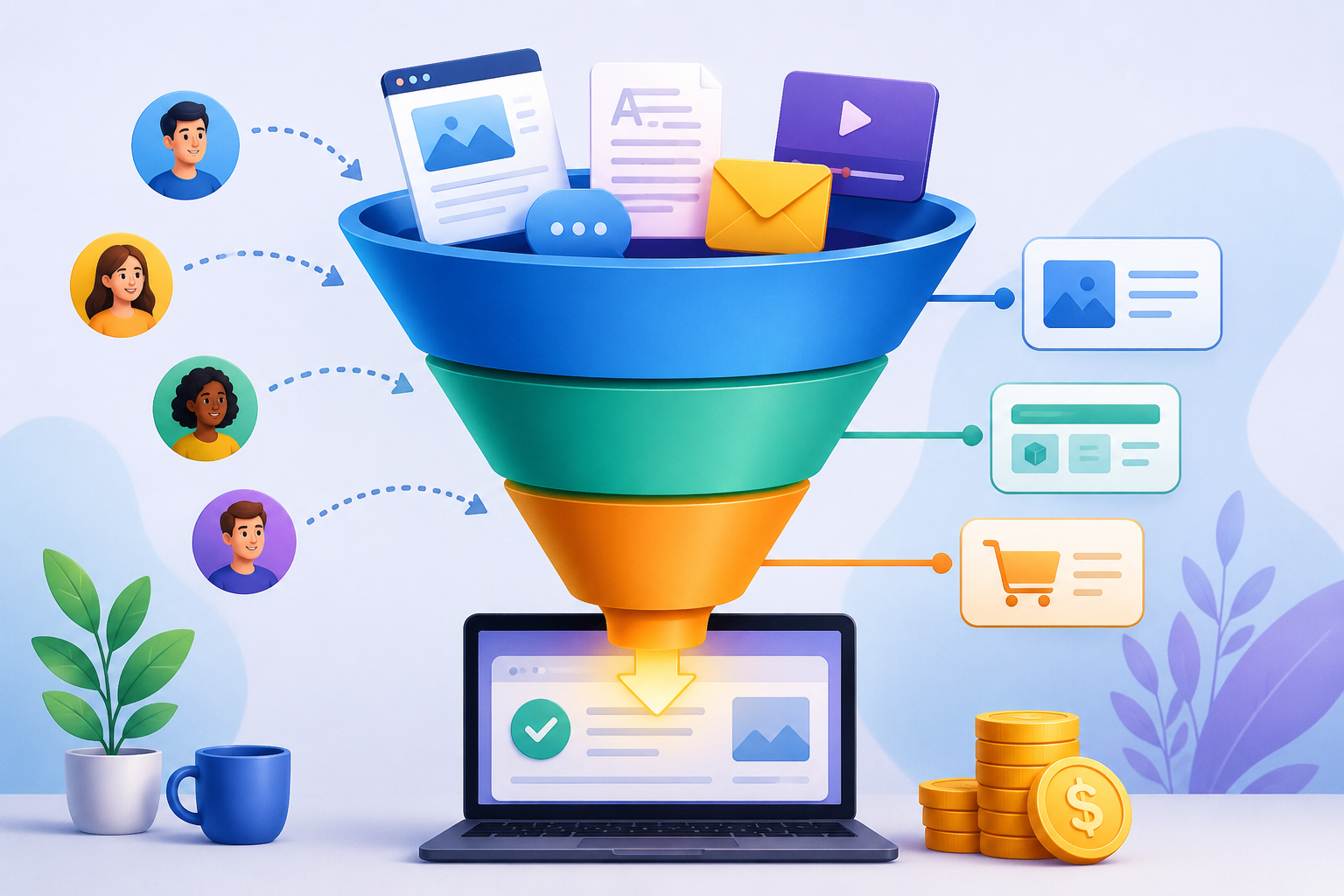
A blog content funnel helps turn casual readers into engaged prospects by guiding them from discovering your content to taking action.
Instead of publishing random posts, you create content that meets readers at each stage of their journey.
A typical funnel moves through three stages: awareness, consideration, and conversion.
When these stages work together, your blog can educate readers, build trust, and naturally guide them toward the next step.
What Is a Blog Content Funnel?
A blog content funnel is a planned system of blog posts that guides readers from discovering your website to taking a useful next step, such as joining your email list, exploring a product, or making a purchase.
Instead of treating every blog post as a separate piece of content, a content funnel connects different topics so readers can move naturally from one stage to the next.
At the top of the funnel, your goal is to attract people who are looking for answers, information, or solutions to a problem.
These readers may not know your brand yet, so helpful guides, how-to articles, beginner tips, and educational posts can introduce them to your website.
The middle of the funnel focuses on building interest and trust by helping readers understand their options and find the right solution for their needs.
This is where detailed guides, comparisons, case studies, reviews, and solution-focused content can be especially useful.
At the bottom of the funnel, readers are closer to taking action, so content such as product reviews, buying guides, comparisons, and service pages can help them make a confident decision.
The buyer journey is simply the path someone takes from first becoming aware of a problem to considering different solutions and eventually deciding what to do.
Your blog content funnel supports that journey by giving readers relevant information at the right time rather than pushing them toward a sale before they are ready.
There is also an important difference between attracting traffic and converting traffic.
Attracting traffic means getting people to your blog through search engines, social media, referrals, or other channels.
Converting that traffic means giving those visitors a clear and relevant next step, such as reading another article, downloading a resource, signing up for your newsletter, requesting information, or checking out a recommended product.
A successful blog content funnel connects these two goals by turning individual blog posts into a connected path that helps readers find answers, build trust, and take meaningful action.
Why Build a Content Funnel for Your Blog?
- Attract the right audience: Create content around the questions, problems, and topics your ideal readers are already searching for.
- Build trust and authority: Helpful, accurate content shows readers that you understand their needs and can provide useful solutions.
- Turn readers into leads: Use relevant calls to action, email signups, and lead magnets to turn interested visitors into contacts you can nurture.
- Encourage conversions and sales: Guide readers toward product pages, services, reviews, or other offers when they are ready to take action.
- Create a more strategic content plan: A funnel helps you plan content with a clear purpose instead of publishing unrelated blog posts.
Understand the Stages of a Blog Content Funnel
A blog content funnel typically has three main stages: top of funnel (TOFU), middle of funnel (MOFU), and bottom of funnel (BOFU).
Each stage serves a different purpose, helping you attract new readers, build trust, and guide interested visitors toward taking action.
Top of Funnel: Attract New Readers
The top of the funnel focuses on reaching people who are discovering a topic, problem, or need for the first time.
Your goal is to provide helpful information without immediately trying to sell something.
- Target informational search queries: Focus on questions and topics people search for when they want to learn something.
- Create beginner-friendly educational content: Publish simple guides, tutorials, tips, and explanations that answer common questions.
- Use SEO to attract relevant organic traffic: Optimize your content around relevant keywords and search intent so the right readers can find it.
- Use broad, helpful content formats: Guides, how-to posts, listicles, and educational articles work well at this stage.
Middle of Funnel: Build Trust and Interest
The middle of the funnel is where readers already understand their problem and want to explore possible solutions.
Your content should help them make sense of their options while showing why your advice is worth following.
- Address specific problems and needs: Create content that answers more detailed questions and helps readers solve particular challenges.
- Provide deeper information and comparisons: Use detailed guides, comparisons, and examples to help readers evaluate different solutions.
- Use internal links to related content: Connect relevant blog posts so readers can easily find the next piece of information they need.
- Use solution-focused content: Case studies, comparisons, detailed guides, and solution-focused posts can help readers move closer to a decision.
Bottom of Funnel: Drive Conversions
The bottom of the funnel targets readers who are ready to take action.
They have identified what they need and are now looking for the best option, product, service, or next step.
- Target high-intent readers: Focus on topics that indicate someone is comparing options or preparing to make a decision.
- Create decision-focused content: Product comparisons, reviews, buying guides, and service-focused posts can help readers choose confidently.
- Include clear calls to action: Tell readers what to do next, whether that means viewing a product, signing up for an email list, or contacting your business.
- Link to relevant conversion pages: Direct interested readers to products, services, email signup forms, or other pages where they can take action.
How to Build a Blog Content Funnel Step by Step
1. Define Your Target Audience
Start by identifying exactly who you want your blog to attract, because content created for everyone often connects with no one in particular.
Consider your ideal reader’s interests, experience level, common problems, goals, and the type of information they need before making a decision.
Pay attention to the questions they ask and the words they use when searching for answers.
You should also understand their buying motivations, including what they value most, what concerns might hold them back, and what information could help them feel confident about taking action.
2. Map Your Customer Journey
Once you understand your audience, map out the steps they typically take from discovering a problem to choosing a solution.
- At the awareness stage, readers usually need simple educational content that helps them understand a topic or identify a problem.
- At the consideration stage, they need more detailed information that helps them compare options and decide which approach may suit them.
- At the decision stage, they often want reviews, comparisons, pricing information, buying guides, or other content that supports a final choice.
Mapping these needs makes it easier to create a blog content funnel where each article has a clear purpose.
3. Research Keywords for Each Funnel Stage
Keyword research helps you discover what your audience is actually searching for at different points in their journey.
Look for informational keywords for top-of-funnel content, commercial keywords for readers comparing solutions, and transactional keywords for people who are ready to take action.
For example, someone searching “how to choose a coffee maker” is likely still learning, while someone searching “best coffee maker for small kitchens” is comparing options.
Match each keyword to the searcher’s intent instead of forcing every keyword into the same type of article.
4. Create Content for Each Funnel Stage
Your blog should include a balanced mix of content that attracts new readers, builds interest, and supports conversions.
Start with helpful top-of-funnel articles that answer common questions and bring relevant visitors to your website.
Then create middle-of-funnel content that explores specific problems, compares solutions, and links back to your broader educational posts.
Finally, publish bottom-of-funnel content such as product reviews, buying guides, comparisons, and service-focused articles for readers who are closer to taking action.
Choose topics that support both your audience’s needs and your broader business goals so every piece of content has a reason to exist.
5. Connect Your Content With Internal Links
Internal links are what turn separate blog posts into a working content funnel.
When a broad informational article naturally leads to a more detailed guide, link the two together so readers can continue exploring the topic.
From there, you can guide interested readers toward comparison posts, reviews, product pages, or other conversion-focused content.
Use clear, relevant anchor text that tells readers what they can expect when they click the link.
Avoid adding links simply to increase the number of links on a page; every internal link should help readers find useful information or take the next logical step.
6. Add Lead Magnets and Calls to Action
A lead magnet is a useful free resource offered in exchange for a reader’s contact information, such as an email address.
Examples include checklists, templates, ebooks, guides, worksheets, and short email courses.
Place these offers where they naturally match the content rather than showing the same offer to every visitor.
Your calls to action should also reflect the reader’s stage, such as suggesting another helpful article for a new visitor or recommending a product comparison to someone who is ready to evaluate options.
7. Measure and Improve Your Funnel
Once your blog content funnel is running, use your data to see what is working and where readers are losing interest.
Track metrics such as organic traffic, engagement, email signups, internal link clicks, and conversions to understand how readers move through your content.
Look for pages that attract plenty of visitors but generate few clicks or signups, as these may need stronger internal links, clearer calls to action, or more relevant next steps.
Also identify content that ranks well or receives steady traffic but is outdated or incomplete.
Regularly updating weak points in your funnel can make your existing content more useful without requiring you to constantly publish new articles.
Blog Content Funnel Examples
Example: Coffee Blog Content Funnel
1. Top of funnel:
“How to Choose the Right Coffee Maker” — This beginner-friendly post attracts readers who are researching their options.
2. Middle of funnel:
“Drip Coffee Maker vs. Espresso Machine” — An internal link from the first post introduces a more detailed comparison for readers considering different types of machines.
3. Bottom of funnel:
“Best Espresso Machines for Beginners” — Readers who are ready to buy can follow another internal link to a product-focused guide.
4. Conversion:
The buying guide can direct readers to recommended products, detailed reviews, affiliate links, or an email signup.
The same approach can work in almost any niche, whether you write about fitness, personal finance, travel, technology, or marketing.
The key is to create several related blog posts that answer different questions at different stages of the reader’s journey.
Internal linking connects those posts and gives readers a clear path forward.
For example, a broad informational article can link to a detailed guide, the detailed guide can link to a comparison, and the comparison can link to a product or service page.
This turns individual articles into a connected blog content funnel that helps readers find the information they need while naturally moving closer to taking action.
Common Blog Content Funnel Mistakes to Avoid
- Creating only top-of-funnel content: Attracting readers is important, but you also need content that builds trust and helps visitors take the next step.
- Focusing on keywords without considering search intent: A keyword alone does not tell you what type of content a reader needs, so always consider the purpose behind the search.
- Using generic CTAs: Replace vague calls to action with specific next steps that match what the reader is likely to want.
- Failing to connect related articles: Use relevant internal links to help readers move naturally from one useful post to another.
- Ignoring conversion-focused content: Include reviews, comparisons, buying guides, and other content that helps readers make informed decisions.
- Not tracking funnel performance: Monitor traffic, engagement, clicks, signups, and conversions to identify where your funnel needs improvement.
Tips for Creating an Effective Blog Content Funnel
- Start with your audience and business goals: Create content that solves real problems for your target readers while supporting the results you want from your blog.
- Build topic clusters around key customer problems: Group related posts around important topics and connect them with internal links to create a clear content path.
- Prioritize helpful content over aggressive selling: Focus on answering questions and helping readers make informed decisions rather than pushing products too early.
- Keep CTAs relevant to each funnel stage: Match your call to action to the reader’s needs, whether that means reading another article, downloading a resource, or exploring a product.
- Regularly update older content: Refresh outdated information, improve weak sections, and add relevant internal links to keep your funnel useful.
- Use analytics to refine your strategy: Review traffic, engagement, clicks, signups, and conversions to see what works and where your content funnel can improve.
Final Thoughts
A well-planned blog content funnel helps turn separate blog posts into a clear path from discovery to action.
Focus on creating the right content for each stage, then connect those posts with relevant internal links and useful calls to action.
Start by auditing your existing blog and look for gaps where readers need more helpful content or a clearer next step.
FAQs
What is a blog content funnel?
A blog content funnel is a series of connected posts that guides readers from discovering your content to taking action, such as signing up, contacting you, or making a purchase.
What are the stages of a content funnel?
The top attracts new readers with helpful information, the middle builds trust and helps them evaluate solutions, and the bottom encourages readers who are ready to take action to convert.
How do I create a content funnel for my blog?
Define your audience, map their buyer journey, research keywords for each stage, create relevant content, connect posts with internal links, and add clear calls to action that guide readers forward.
What type of content works best at the top of the funnel?
Educational blog posts, how-to guides, listicles, beginner guides, and other helpful content that answers common questions work well for attracting readers at the awareness stage.
How do I turn blog readers into customers?
Use relevant internal links, lead magnets, clear CTAs, product-focused content, and email marketing to build trust and guide interested readers toward a purchase.





Hi, I’m Daniel Cacheton. I specialize in WordPress performance optimization and have spent 7+ years improving site speed, Core Web Vitals, and overall user experience. I share practical, no-fluff guides based on real testing to help you build faster WordPress websites.